Halal Restaurant Verification: 5 Steps to Confirm Authentic Halal Status
Finding a halal restaurant you can trust is crucial for Muslim diners who want to maintain their dietary obligations while enjoying diverse cuisines. As the popularity of halal food increases, the number of outlets that offer halal food has increased and they claim to offer halal food- not all of them are certified to offer halal. This is the ultimate guide that will instruct you on how to find out accurately whether a restaurant is in fact halal, what to look out to, and how to be sure of getting the genuine halal restaurants.
Why Verification Matters
Religious Duty and Contentedness.
To the practicing Muslim, it is not a choice to eat halal food, but it is a religious obligation. Consuming non-halal meat without knowing about it does not only have an influence on your diet but also on your religious life. Proper checking would make sure that you are meeting your religious obligation even when you are out to eat.
The Rise of “Halal-Washing”
However, unfortunately, there are also restaurants, which apply the concept of halal in a loose way to lure Muslim individuals without fulfilling the right quality. This can also be referred to as halal-washing and it is the purportation that products are halal without an actual halal certification or sourcing. Knowledge on verification techniques will guard you on such fallacies.
Trust Your Dining Experience
You can be sure that you can eat without having any anxiety when you know a restaurant is a Halal certified one. This calmness improves the food experience and lets you concentrate on what you eat, with whom you are eating and the atmosphere instead of thinking about what is on your plate.
Step 1: Look for Official Halal Certification
Understanding Halal Certification Bodies
Certification of halal is obtained by substantial organizations of the Islamic faith and not through self-proclamations. One of the largest certification organizations is the Islamic Food and Nutrition Council of America (IFANCA), the Halal food Authority (HFA) in UK, and JAKIM in Malaysia among other regional Islamic councils. They all have certain standards and inspection procedures.
What a Valid Certificate Should Include
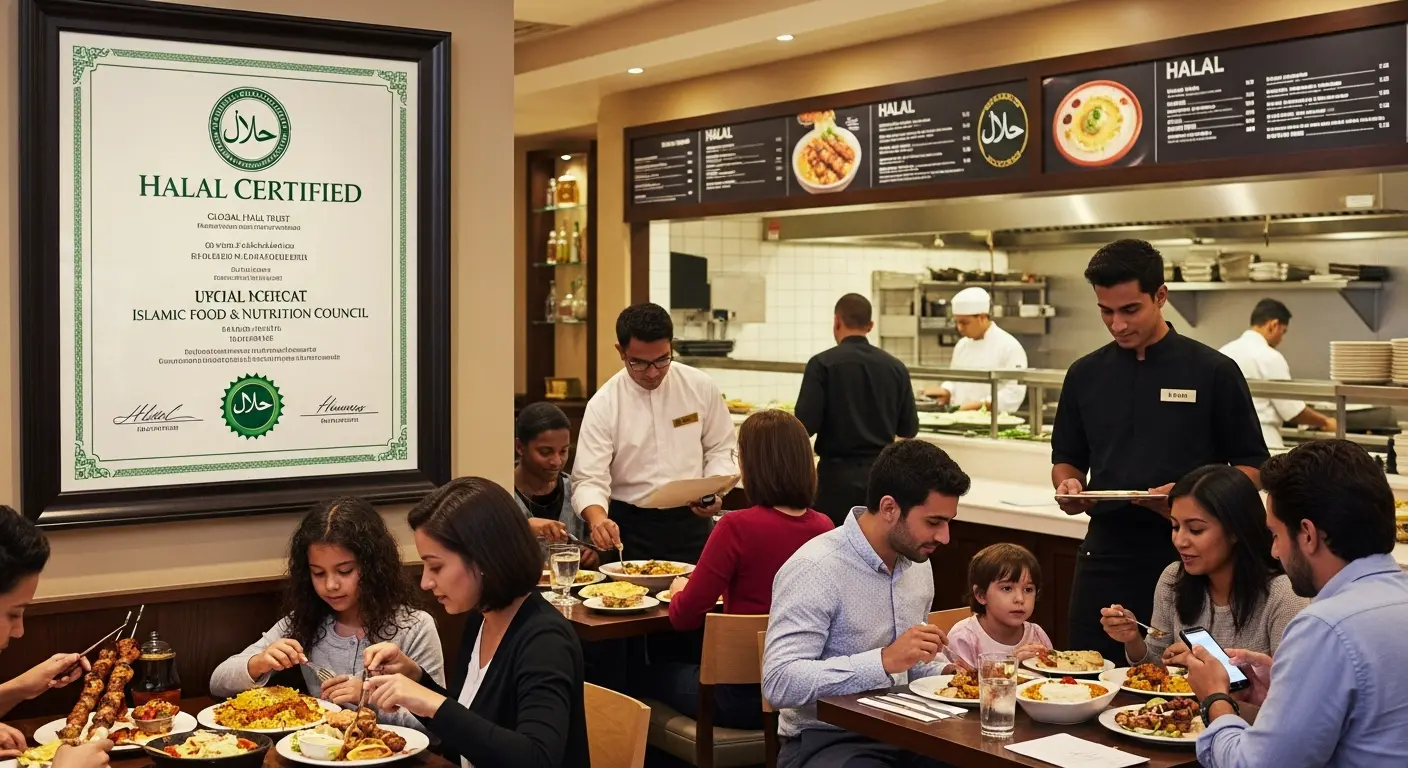
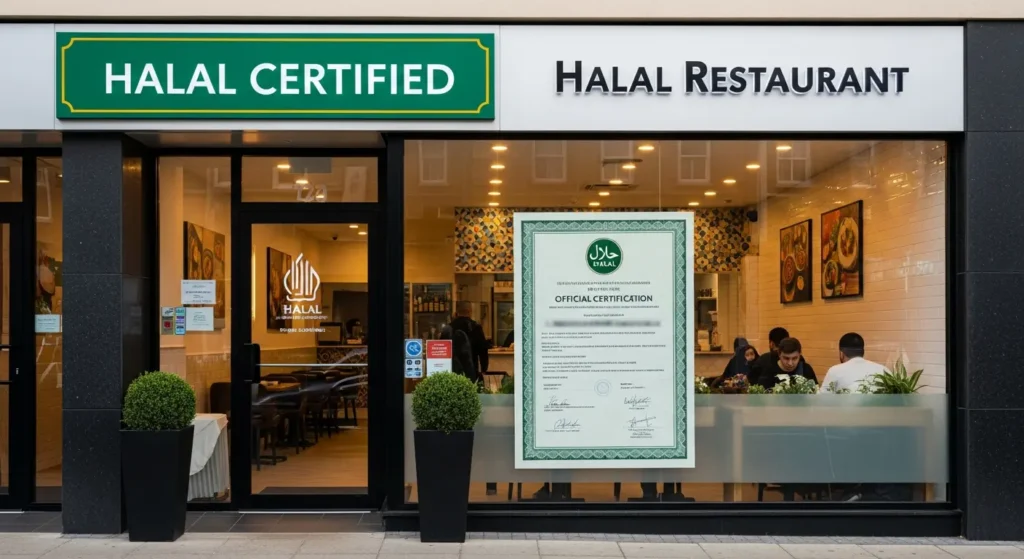
A true halal certification certificate reflects a number of significant elements. Find the official name and logo of the certifying organization, the legal business name of the restaurant, very specific issue and expiration dates (certifications are not permanent), a certificate number to be verified against and contact details of the certifying organization. The certificates must be up to date, out of date ones imply that the restaurant is not verified any longer.
Where to Find the Certificate
Official halal restaurants have their certification displayed near the entrance, counter or a conspicuous wall. In case you do not notice it at first, ask. Certification is a source of pride to legitimate establishments. Most of them also share photos in their site or social media. When a restaurant tries to tell you it is halaal but will not be presented with any certification, this is a serious warning.
Verify the Certificate’s Authenticity
Do not blindly think a certificate on display is real. Note down the name of the certifying body and the certificate number, and follow up on the certification body. Majority of the organizations have databases and/or phone check-up services online. We also have aefirectory of our halal restaurants at SavorHalal.com, where we check the certifications and list restaurants.
Step 2: Ask the Right Questions
About Meat Sourcing
The meat is the most important thing regarding the halal food. Enquire about the origin of the halal meat in the restaurant. Established institutions are allowed to identify their suppliers and usually collaborate with established distributors of halal meat. Enquire whether all meat is halal or only some items- some restaurants probably have both halal and non-halal meat, which poses the risk of cross-contamination.
About Slaughter Methods
There is no need to fear inquiring about slaughter practices. Restaurants that are Halal certified ought to ensure that their meat is produced by slaughtered animals as per the Islamic laws (dhabihah). Enquire whether the supplier has documentation that indicates halal slaughter. These questions will not aggravate the professional establishments, as they will realize the relevance to Muslim customers.
About Alcohol and Pork
Alcoholic or pork-eating restaurants are also problematic even in case meat is halal. Do not be coy: terminology, Do you serve alcohol on the premises? and “Does your kitchen consume any pork products? There are Muslims who tolerate halal meat in alcohol serving restaurants and there are those who do not. The total menu of the restaurant will assist you to make wise decisions depending on your own standards.
About Cross-Contamination
The cross-contamination may be defined as contact of halal food with non-halal. Enquire whether the restaurant has different preparation and cutting boards and utensils used in preparing halal food. Ask about the use of cooking oil, whether between the halal and non-halal. Determine whether the grills, fryers or ovens used to cook one type of food are used to cook the other type of food. Specialized halal restaurants that serve halal food only eradicate all these issues.
Step 3: Recognize Red Flags
Vague or Evasive Answers
When employees are unable to provide easy answers to such questions as the halal certification or the origin of the meat, watch out. The answers such as I believe it is halal or the owner says it is halal are not enough. Authorized halal restaurants educate employees with the knowledge of how to answer these questions with certain knowledge regarding their certification and suppliers.
No Visible Certification
Although not every area needs the certification to be displayed, the certified places are reputable and one can easily locate the certification. When a restaurant promotes as a halal restaurant and cannot or refuses to display certification, then there is a serious concern. Consider this is particularly important of restaurants that market themselves as halal-friendly or Muslim-friendly when they are not actually halal certified these are terms that basically imply that they are accommodative to dietary restrictions but not entirely halal.
Suspiciously Low Prices
Halal meat is generally pricier than the conventional meat because of certain requirements regarding slaughter and certification. In the case when the prices are too low in relation to other halal restaurants that offer the same food, make inquiries. Very low prices can even show that the restaurant is not really serving certified halal meat.
Mixed Reviews from Muslim Customers
Reviews on the internet done by Muslim customers. In case one or more reviewers cast doubts on the halal status of the restaurant, or report discrepancies, heed them. To assist you in making the right choice, our halal food directory is characterized by the verified reviews by Muslim community.
Inconsistent Information
When the story of the restaurant is altered with each visit, or when the information on the certifications or suppliers is offered by different members of staff, this is a significant red flag. Institutionalized systems have a stable and written information available to every employee.
Step 4: Use Technology and Resources
Halal Restaurant Apps and Directories
Development SavorHalal.com is a specialized platform that checks the certifications of restaurants before listing them. Our halal restaurant guide saves your time by pre-verifying your work. We are keeping a current record of certifications, dates of inspection and customer feedback. The reliability of using these resources is much better compared to using the general restaurant apps that do not check whether they are halal or not.
Check Certification Body Websites
The majority of the halal certification organizations have searchable databases of certified facilities. Go to the certifier Web site and enter the name of the restaurant. This establishes the existence of certification as up to date. Consumers can use online verification services in organizations such as IFANCA.
Social Media Investigation
Monitor the social media of the restaurant. Search their posts regarding their halal certification, pictures of the certificates, or references to the renewal of the certifications. This information is usually taken pride in by authentic halal restaurants. Nevertheless, take caution it is only social media claims without certification that are not enough to be used as proof.
Community Recommendations
Reach out to the local mosques, Islamic centers, or online communities of Muslims. The members of the community usually exchange recommended halal restaurants and caution on suspicious restaurants. Recommendations of practicing Muslims are very important particularly when they are attested in large numbers in a restaurant.
Step 5: Understand Different Levels of Halal Compliance
Fully Halal Certified Restaurants
These are purely halal food joints that are well certified and regularly inspected. All the dishes on the menu are halal and this ensures that there is no concern of cross-contamination. This is the halal best in dining and offers the utmost assurance of the observing Muslims.
Partially Halal Options
Certain restaurants have certain halal menu items besides non-halal food. These can be certified on some of the dishes but should be ordered cautiously. These setups have increased risk of cross-contamination, although they are okay to certain Muslims. Never hesitate to pose a long and penetrating question on the issue of preparation methods and equipment sharing.
Halal-Friendly vs. Halal-Certified
Halal-friendly can refer to vegetarian or seafood that does not contain any haram ingredients, but is not officially certified. These are applicable in certain cases and fail to address the standards of the halal certified facilities. Know the distinction and make your selection depending on the level of comfort and the religious needs.
Self-Proclaimed Halal
There are restaurants who purport to be halal and are not certified. The owners can be of good intentions and get in the halal meat, but until there is third-party certification, you can never be sure. Eat with a lot of caution or order certified foods in our halal restaurant directory.
Regional Differences in Halal Standards
Certification Requirements Vary by Location
The minimum standards of halal vary greatly among countries and regions. There are regulated systems of halal certification that are well controlled by the government of some countries, and there are those that do not have any government involvement and use the services of privately run Islamic institutions. In the event of traveling, investigate local certification organizations and their reputations. The systems at the Muslim-majority countries are usually well established whereas there is variation in the Western countries.
Common International Certifiers
Get acquainted with other large certification agencies in other locations. The IFANCA and ISNA are well-known in North America. Halal Food Authority (HFA) and Halal Monitoring Committee (HMC) are found in the UK. The JAKIM certification in Malaysia is one of the most respected ones among countries. There are several certifying bodies in Australia such as AFIC. Knowledge about these bodies will assist you in checking the halal restaurants in any place.
Cultural Interpretation Differences
Other locations or Islamic scholars have a somewhat different understanding of the halal requirements, especially when it comes to such topics as stunning before slaughter or machine slaughter. These differences are present although all seek the same goal, which is compliance with halal. Study the requirements of the local certification authorities to know what they can allow. Select certifiers whose requirements are suitable to your tastes or academic preferences.
Building Your Personal Halal Restaurant List
Document Verified Restaurants
After satisfying yourself with a halal restaurant, add it to your personal list. Record certification body, date of certificate expiration and any other particulars of their standards. Post this information to friends and family and the Muslim community can discover reliable places of eating halal.
Regular Re-Verification
Status in certification is changeable. Restaurants are not allowed to renew certification, switch suppliers or alter their practices. Always check-up on your favorite places every now and then, particularly when you feel that there have been some changes in the management, menu, or the quality. The annual check will make sure that there is still adherence to the halal certified standards.
Contribute to Community Knowledge
Report your results on websites, such as SavorHalal.com. You should provide comments in detail about the certifications, experience of verification, and any other information. Your donations will make other Muslims access genuine halal food and enhance community resources. In the event you find suspicious activities, reporting will save other people the risk of accidentally eating non-halal food.
What to Do If You Discover a Problem
If Certification Is Fake or Expired
Immediately give the certification body details and evidence. Report the restaurant to the local Muslim organizations and community groups. Post reviews to inform others of the fraudulent postulations. Stop going to the restaurant in your own list and tell your friends who might visit this restaurant.
If Cross-Contamination Concerns Arise
Discuss with the management about the issues. In case they are not aware, they can fix the issue. When they are dismissive or defensive, then avoid the other halal restaurants. Your experience in reviews will make other people make wise choices.
Supporting Legitimate Halal Businesses
Once you discover some really halal certified restaurants with good verification practises, patronise them with great zeal. Visit these establishments frequently, make positive reviews, and recommend them to many people. With proper support of the community, the true halal restaurants have a chance of succeeding and the rest are motivated to meet the right standards.
Frequently Asked Questions
Can I trust a restaurant just because the owner is Muslim?
Not automatically. The fact that the owner is a Muslim is also a positive factor that does not necessarily mean that it was halal certified or that it practiced it correctly. The Muslim-owned restaurants are yet to receive valid certification by established Islamic institutions. Certification will always be checked irrespective of ownership- many honest Muslim owners do receive the correct certification that is halal in order to serve their community properly.
What if a restaurant shows a certificate I don’t recognize?
Turn to the Internet to conduct research on the certification body. Inquire whether it is a member of the existing Islamic groups and what their criteria are. Get in touch with them to ensure that the certificate is authentic. Where you are unable to locate accessible information about the certifier and where his standards are dubious, then alternative restaurants that have been given accreditation of halal status should be selected instead.
Are chain restaurants with halal options reliable?
It varies significantly. In other places, especially in the Muslim dominated countries, some international chains do hold a firm halal certified standard. Nevertheless, verification is necessary–certification can be applied to certain places and not to others. Verify each branch separately with the help of verification steps in this guide, and check whether they are a halal restaurant with the help of our directory.
How often should halal certification be renewed?
The majority of legitimate certification bodies have to be renewed yearly with regular check-ups. Others do perform surprise audits during the year. The existence of certificates with an expiration date that exceeds a year or no expiration date should be a cause of concern. Existing and current certification shows that they still uphold the standards of halal food and that they are being actively monitored.
What’s the difference between “halal meat” and “hand-slaughtered”?
Hand-slaughtered or hand-zabihah is usually the traditional Islamic slaughtering where every animal is slaughtered individually and prayed over. Some certification agencies have accepted machine-slaughtered meat as part of Halal meat. Both are halal, however, some Muslims like hand-slaughtered because of the traditional interpretations. Request restaurants which process their halal meat suppliers adopt to match your individual criteria.
Conclusion
To know whether a restaurant is really halal, you must be diligent, though this is necessary to uphold your religious duty as well as eat without reservations. On how to find real halal restaurants, proper standards can be discovered by checking on legitimate halal certification, asking the correct questions, red flags, and using reliable sources.
Also, keep in mind that verification does not imply being hard or suspicious it is merely practicing your right as a consumer and doing your duty as a faithful member of a religion. Certified halal restaurants that are legitimate are open to inquiries and are happy to show their adherence. Your close check also favors businesses that invest in the right certification and deterring those which make untrue claims.
Are you ready to locate checked-out halal restaurants that you can trust? Go to SavorHalal.com to find certified halal restaurants that are certified. Our universal halal restaurant guide only lists those restaurants that we have confirmed that they are being certified as authentic halal. Explore thousands of entries in the top cities, read the opinion of Muslim diners, verify the certification information, and eat without worries. Find halal food around you and begin to have a taste of the true halal meals today, as you deserve to eat halal with no concessions.